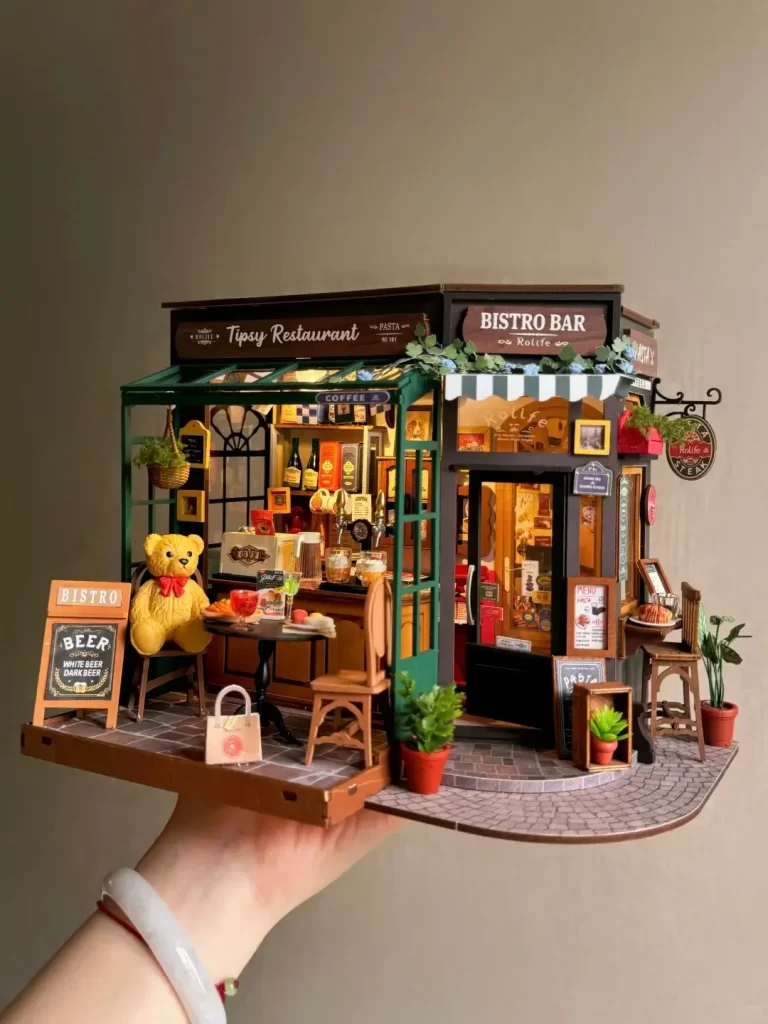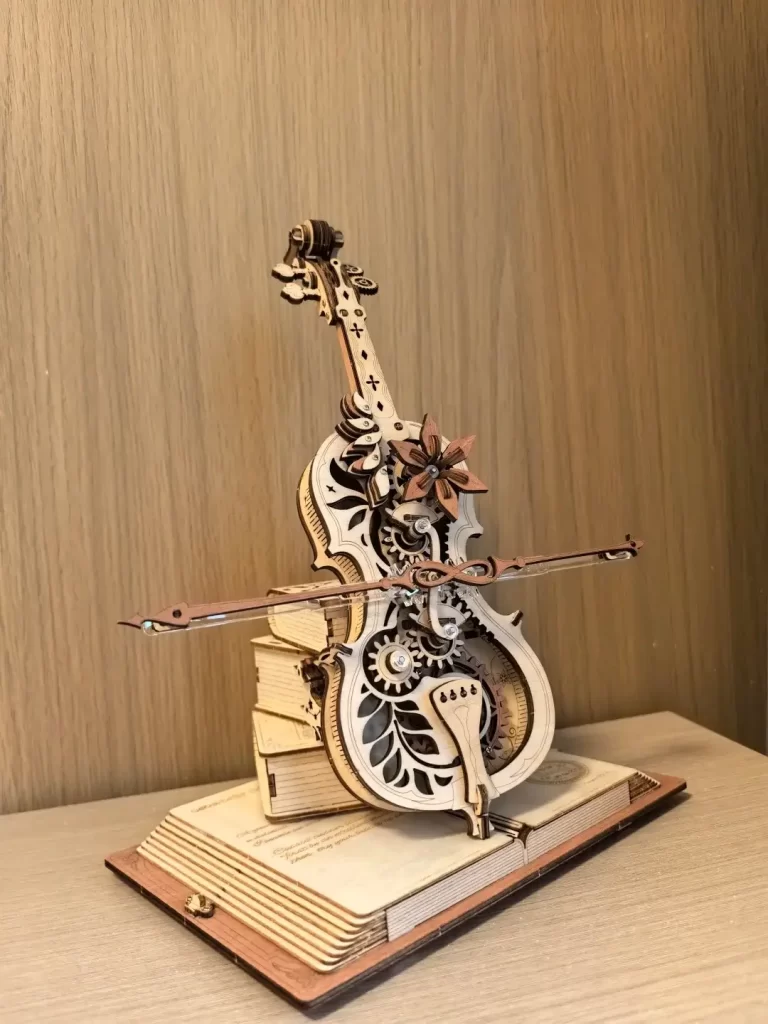
DIY book nook kits combine miniature model building, wooden puzzle assembly, lighting, storytelling, and bookshelf decoration in one product.
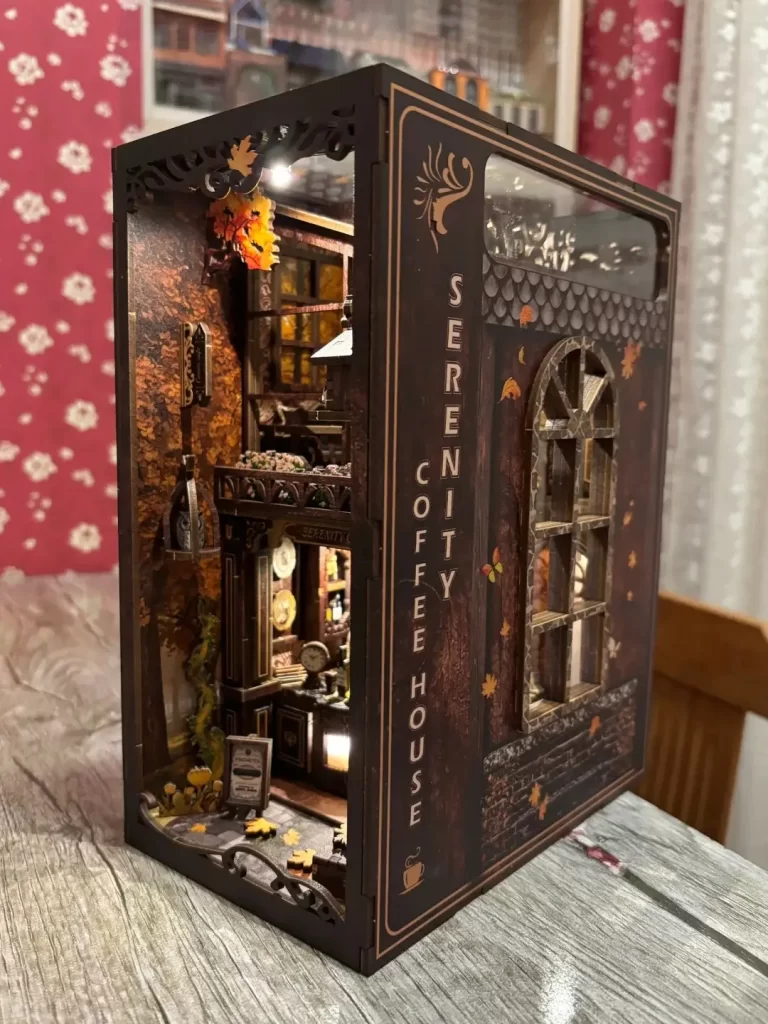
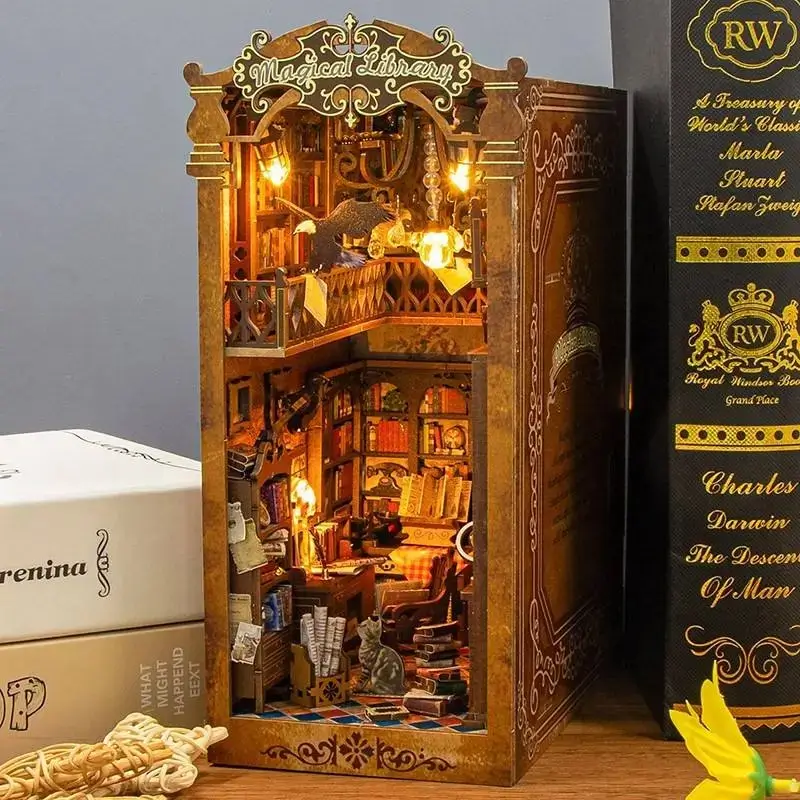
Once completed, a book nook becomes a narrow miniature scene designed to sit between books or stand independently on a shelf. Depending on the design, it may recreate a library, old street, fantasy workshop, museum, railway station, café, underwater world, traditional building, or seasonal scene.
This combination makes book nook kits attractive to bookstores, gift shops, hobby retailers, toy and craft stores, online sellers, museum shops, DIY workshops, and private-label brands.
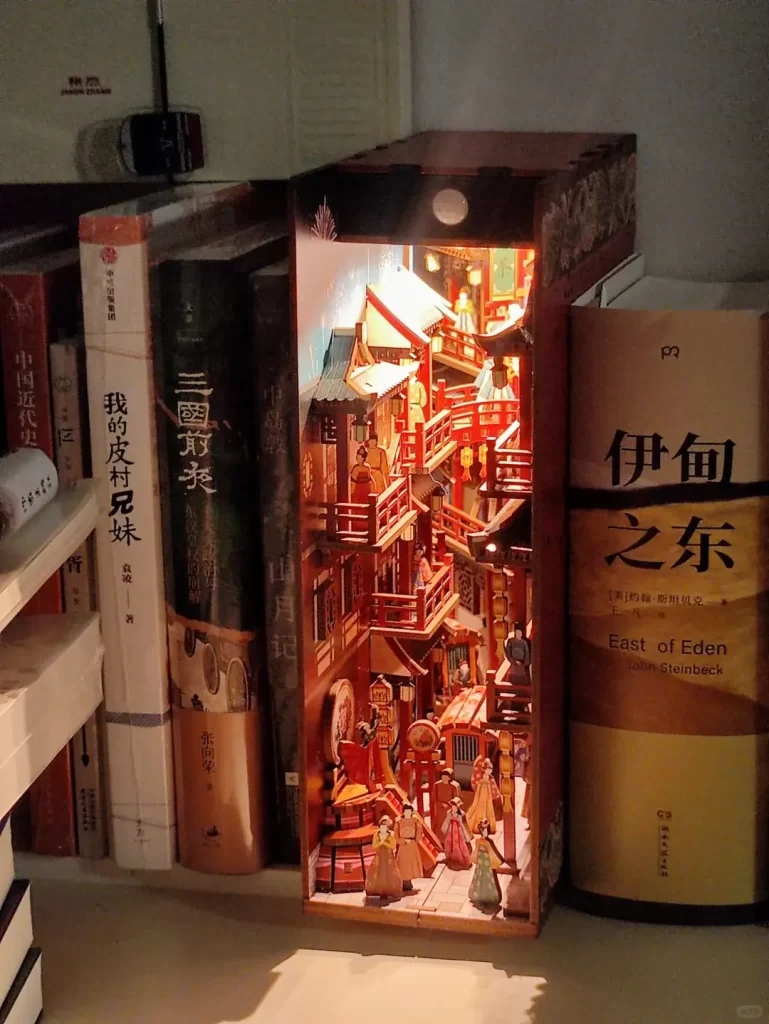
However, wholesale buyers should not choose a kit only from its finished product photograph. A visually impressive model can still create complaints if its panels do not fit, the lighting is difficult to install, components are missing, the instructions are unclear, or the packaging does not protect long wooden pieces.
This retailer’s checklist explains what to evaluate before ordering wholesale DIY book nook kits, how to compare different configurations, and which details should be confirmed before approving samples and bulk production.
Table of Contents
What Is a DIY Book Nook Kit?
A DIY book nook kit is a three-dimensional craft model that customers assemble from pre-cut structural pieces, printed decorations, miniature accessories, lighting components, and an instruction manual.
The finished scene is usually narrow enough to fit on a bookshelf. Unlike an ordinary bookend, its main purpose is not simply to support books. It creates a miniature visual world inside the shelf and may include architectural depth, interior decoration, LED lighting, transparent panels, moving gears, sound, or other interactive details.
Book nook kits may also be described as:
- Book nook shelf insert kits
- DIY bookshelf insert kits
- Wooden book nook kits
- Miniature book nook kits
- 3D wooden book nook puzzles
- DIY miniature bookshelf scenes
The exact terminology differs between markets, so retailers should use several natural descriptions in product copy while keeping one consistent primary product name.
How Is a Book Nook Different from a DIY Miniature House?
Book nooks and miniature houses often use similar materials and production methods, but they are not the same product format.
A DIY miniature house is usually designed to be viewed from the front or from several open sides. It may reproduce a complete room, shop, house, café, or other freestanding interior.
A book nook is normally narrower and deeper. It is designed around the viewing angle from the front of a bookshelf, so perspective, lighting placement, side-panel stability, and finished shelf dimensions are especially important.
For book nook buyers, the key questions include:
- Will the completed model fit a standard bookshelf?
- Is the front scene visually effective from a distance?
- Are the side panels straight and stable?
- Does the LED lighting illuminate the main scene?
- Can the battery box and switch still be reached after assembly?
- Will the narrow or tall panels remain protected during shipping?
Retailers interested in wider, freestanding scenes can also review our guide to wholesale DIY miniature house kits.
Retailer’s Checklist for Choosing Wholesale DIY Book Nook Kits
1. Define the Target Customer Before Selecting Designs
The best product depends on who will buy it.
A beginner may prefer a smaller kit with fewer delicate pieces and a straightforward lighting system. An experienced hobbyist may prefer more complex architecture, detailed furniture, multiple lighting points, moving mechanisms, or a longer assembly project.
Before selecting a range, identify:
- Target customer age
- Hobby experience
- Expected retail price
- Preferred themes
- Acceptable assembly time
- Sales channel
- Gift or collectible positioning
- Desired package size
- Entry-level, standard, or premium positioning
A kit should not be described as “easy” simply because its finished dimensions are small. A compact product may still contain many tiny parts or complicated wiring.
The difficulty level should be based on a complete sample assembly, not only on the part count or supplier description.
2. Confirm Finished Dimensions and Bookshelf Fit
Dimensions are especially important for book nook kits.
Catalogs may list dimensions in different orders, such as length × width × height or width × depth × height. Before placing an order or publishing a product page, standardize every specification as:
Width × Depth × Height
Also confirm whether the stated measurements refer to:
- The finished model
- The main wooden structure
- The external cover
- The retail box
- The shipping carton
The current Gami Crafts catalog includes compact and tall formats as well as broader horizontal designs. Many standard models are approximately 23 × 18 × 11 cm in one dimensional arrangement, while other products are taller, narrower, or more compact.
This variety allows buyers to serve different shelf formats, but it also means that one generic size description cannot be copied across the complete range.
For every model, check:
- Finished width between books
- Finished depth relative to the shelf
- Finished height
- Front opening dimensions
- Battery-box position
- Space needed to operate the switch
- Whether a dust cover or outer book-style case changes the dimensions
Online sellers should display the dimensional order clearly in both centimeters and inches where appropriate.
3. Review the Main Materials
Many wooden book nook kits use MDF or another engineered wood for their structural parts. In the current catalog, 2.5 mm MDF is a common specification for a large group of models.
A complete kit may also include:
- Printed paper and card
- Transparent plastic panels
- Fabric
- Metal wire
- Plastic accessories
- Resin decorations
- Miniature furniture components
- Stickers
- LED lights
- Battery box
- Decorative plants
- Tools and auxiliary materials
Material quality should be evaluated according to the product structure.
Important points include:
- Are the panels flat?
- Is the material thickness consistent?
- Do narrow pieces break easily?
- Are transparent panels scratched?
- Does printed paper tear during folding?
- Do stickers adhere properly?
- Are plastic or resin decorations cleanly formed?
- Are metal and electrical parts protected from corrosion?
A lower material cost is not useful if it increases breakage, assembly problems, returns, or negative reviews.
4. Check Laser-Cutting Accuracy and Slot Fit
Most wooden book nook kits depend on tabs, slots, grooves, and interlocking panels.
If the cutting tolerance is poor, customers may experience:
- Parts that cannot be inserted
- Loose joints
- Leaning side panels
- Misaligned roofs or frames
- Broken narrow components
- Gaps between printed sections
- Excessive manual trimming
Clean laser cutting should produce accurately shaped pieces with controlled edges and consistent fit.
Some light sanding can be normal in wooden model assembly. However, the customer should not need to repair major dimensional errors or substantially reshape components.
When reviewing a sample, test:
- Main structural joints
- Small furniture pieces
- Door and window openings
- Curved or narrow decorative parts
- Moving components
- External covers
- Final alignment of both side panels
A flat sheet of wooden parts may look correct even when the completed model does not assemble properly. For this reason, at least one sample should be built completely before bulk approval.
5. Evaluate Printing and Surface Finish
Book nook kits often use printed wall panels, floors, signs, furniture surfaces, book covers, decorative cards, and exterior graphics.
Printing quality has a strong effect on the finished model because small errors become noticeable in miniature scenes.
Evaluate:
- Color consistency
- Sharpness of small details
- Alignment between cutting and printing
- Surface adhesion
- Color matching with the approved sample
- Resistance to ordinary handling
- Legibility of signs and decorative text
- Differences between screen previews and physical samples
UV printing can provide clean, vivid surfaces when the artwork, equipment settings, material, and production control are suitable.
For private-label projects, buyers should approve the actual printed color rather than relying only on a computer screen.
6. Test the Complete Structure, Not Just Individual Parts
A book nook is a narrow three-dimensional structure. Even when individual panels appear correct, the finished product may still have stability problems.
After assembly, check:
- Whether the model stands flat
- Whether the side panels remain parallel
- Whether the top and bottom panels align
- Whether the front scene is centered
- Whether tall panels bend
- Whether the external cover opens and closes properly
- Whether moving parts operate without obstruction
- Whether the completed model can be safely moved
The viewing angle is also important. Interior details should create depth without being hidden behind structural panels.
For premium products, small design improvements in perspective, layering, mirrors, lighting, and foreground placement can significantly improve the visual result.
7. Inspect LED Lighting, Touch Switches and Battery Boxes
LED lighting is one of the most important selling features of many book nook kits.
Available designs may use:
- Standard on/off switches
- Touch-controlled lighting
- Multiple LED points
- Concealed lighting
- Light strips or wire lights
- Battery boxes
- External or hidden switches
Some models may also include moving gears or a music module.
Before approving a lighted kit, test:
- Whether all lights work
- Whether the wire lengths are correct
- Whether connections remain secure
- Whether the battery box functions correctly
- Whether the switch is easy to reach
- Whether the main visual area receives enough light
- Whether wires can be concealed
- Whether the instructions clearly show the connection order
- Whether batteries can be replaced without dismantling the model
Electrical components should be tested after the complete model has been assembled, not only before packing.
Batteries may be excluded from export packages depending on the destination, carrier, and shipping method. This must be confirmed before product listings and packaging are finalized.
8. Verify Every Component Against the Instruction Manual
A book nook kit may contain dozens or hundreds of components. One missing structural panel, wire, sign, or unique decoration can prevent the customer from completing the scene.
A reliable packing process should compare the actual contents with:
- Component list
- Wooden board list
- Accessory bags
- Electrical components
- Tool kit
- Printed paper
- Instruction steps
- Finished product version
The instruction manual should use the same numbering and component design as the production version.
Check whether it clearly explains:
- Part identification
- Assembly order
- Folding and gluing
- Furniture assembly
- Lighting installation
- Wiring route
- Placement of decorative accessories
- Operation of moving parts
- Final testing
- Safety notices
Gami Crafts can support English, Chinese, and customized-language manuals. For complex assembly instructions, translations should be reviewed by a fluent or professional language reviewer before printing.
9. Confirm the Standard Tool and Accessory Pack
A typical configuration may include:
- Pre-cut MDF or wooden pieces
- Printed decoration materials
- Battery box
- LED components
- Accessory pack
- Tweezers
- Sanding tool
- Stickers
- Illustrated manual
The exact configuration varies by model.
Some designs may also include:
- Music movement
- Moving gears
- Touch switch
- Transparent dust cover
- External book-shaped cover
- Extra decorative accessories
- Upgraded tools
Glue may not be supplied in some export orders because of shipping or carrier restrictions. Buyers should state clearly whether glue and batteries are included, excluded, or purchased locally by the end customer.
10. Examine Retail Packaging and Shipping Protection
Book nook packaging must perform two functions:
- Present the product attractively in retail or online photography
- Protect long, narrow, and fragile components during transport
The current catalog includes common retail-box formats around:
- 284 × 190 × 44 mm
- 292 × 204 × 53 mm
- 240 × 165 × 40 mm
- 300 × 190 × 40 mm
These are examples rather than universal standards.
Packaging should protect against:
- Bent structural panels
- Broken narrow pieces
- Scratched transparent parts
- Crushed retail boxes
- Loose accessories
- Missing bags
- Battery boxes pressing against printed panels
- Tools moving inside the package
- Moisture and long-term storage damage
For e-commerce sellers, parcel shipping can place more pressure on individual boxes than pallet delivery to a retail warehouse. Inner trays, dividers, bags, protective boards, and master cartons should therefore be evaluated together.
11. Calculate Carton Quantity by SKU
Do not apply one carton quantity to every book nook design.
Product weight, retail-box thickness, structure, accessories, and music or lighting components can change the appropriate carton quantity.
In the current catalog, many standard models use approximately 16 or 20 pieces per master carton. A heavier configuration is packed 15 pieces rather than 16 specifically to avoid an overweight carton.
This is an important sourcing detail. A carton plan should consider:
- Pieces per carton
- Net weight
- Gross weight
- Carton dimensions
- Product protection
- Manual handling limits
- Freight chargeable weight
- Pallet efficiency
- Warehouse requirements
Buyers should request carton information for each SKU rather than copying one specification across the whole collection.
12. Build a Balanced Theme Assortment
A good wholesale range should not depend on one visual style.
Book nook themes can include:
Library and Bookstore Scenes
These have a natural connection with bookstores, readers, libraries, and book-themed gift shops.
Fantasy and Magic Themes
Fantasy scenes, mysterious workshops, enchanted forests, magical academies, and potion rooms can create strong visual appeal.
City Streets and Cultural Architecture
Traditional streets, historical buildings, cafés, markets, railway stations, and regional architecture can support travel, cultural, and souvenir collections.
Museum and Educational Themes
Astronomy, natural history, dinosaurs, exploration, science, and art themes can appeal to museum shops and educational retailers.
Seasonal Designs
Christmas streets, winter scenes, festivals, and other seasonal themes can support holiday promotions, although buyers must plan ordering and delivery earlier.
Retro Lifestyle Scenes
Photo studios, tailor shops, workshops, taverns, garages, cafés, and collection rooms can appeal to customers who prefer realistic or nostalgic themes.
Mechanical and Interactive Designs
Moving gears, rotating components, lighting effects, touch switches, sound, and music mechanisms can support premium positioning.
A retailer can reduce risk by combining evergreen themes with a smaller number of seasonal or trend-led products.
13. Avoid Unauthorized Intellectual Property
This is especially important for fantasy, movie, game, animation, celebrity, and book-inspired designs.
A design should not use protected characters, logos, names, artwork, buildings, or recognizable fictional elements without appropriate authorization.
Before ordering or customizing a product, confirm:
- Who owns the artwork
- Whether the buyer has permission to use it
- Whether licensed elements are documented
- Whether packaging uses protected names or logos
- Whether product photography creates an unauthorized association
- Whether the product can legally be sold in the target market
For customer-supplied artwork, the buyer should confirm that it owns or is authorized to use the files.
Original themes, public-domain inspiration, licensed artwork, and independently developed designs are safer foundations for long-term private-label product lines.
14. Confirm Testing and Compliance for the Exact Product
Available manufacturing resources may hold factory audits, material documentation, or product reports involving standards and systems such as:
- ISO 9001
- FSC
- BSCI
- SEDEX or SMETA
- EN71
- ASTM F963
- CE
- RoHS
- CARB
However, a factory certificate does not automatically cover every book nook configuration.
Before ordering, confirm:
- Which production facility will make the product
- Whether the document is valid
- Which materials were tested
- Whether the tested product matches the ordered version
- Whether electrical components are covered
- Whether the recommended age affects product classification
- Whether additional destination-market testing is needed
Compliance requirements may change when the materials, battery box, lighting system, accessories, packaging, or age grading changes.
15. Assemble and Approve a Physical Sample
Photographs and digital renderings are useful, but they cannot fully demonstrate the customer’s assembly experience.
A physical sample should be used to check:
- Cutting and fit
- Component completeness
- Structural stability
- Printed colors
- LED function
- Battery-box access
- Instruction accuracy
- Difficulty level
- Assembly sequence
- Packaging protection
- Finished appearance
During sample assembly, record unclear steps, fragile components, tight slots, unnecessary manual trimming, wiring problems, and missing labels.
These findings should be corrected before bulk production and reflected in the approved specification.
16. Create a Written Bulk-Order Specification
After sample approval, the final order specification should record:
- Product code and version
- Finished dimensions
- Dimensional order
- Main materials
- Board thickness
- Component list
- Lighting configuration
- Switch type
- Battery requirements
- Music or moving mechanisms
- Tools and accessories
- Instruction language
- Logo and artwork
- Retail packaging
- Carton quantity
- Net and gross weight
- Testing requirements
- Replacement-parts procedure
- Approved sample reference
- Inspection requirements
A clear written specification reduces misunderstandings between design, production, packing, sales, and purchasing teams.
OEM, ODM and Private-Label Book Nook Options
Gami Crafts Co., Ltd. has its own production facilities and also works closely with selected specialized manufacturing partners.
This integrated production capability allows us to support a broader range of product structures, design styles, order quantities, materials, and customization requirements without limiting buyers to one product line.
Available services may include:
- Selection from existing designs
- Custom logo
- Private-label packaging
- Custom product names
- Custom instructions
- Customized language
- Color and artwork changes
- Theme development
- Structural modification
- Custom dimensions
- LED and switch changes
- Accessory changes
- Dust-cover options
- Music and moving mechanisms
- Customer artwork development
- Sample development
- OEM production
- ODM product development
- Coordinated product-series planning
Customization does not always require a completely new structure.
A buyer may begin with an existing model and customize its artwork, colors, printed panels, accessories, instructions, packaging, and brand presentation. This can reduce development time while still producing a differentiated retail product.
For exclusive projects, new structures and scenes can also be developed according to the buyer’s concept, target price, sales channel, and order requirements.
How Retailers Can Structure a Book Nook Product Range
A balanced assortment can include three levels.
Entry Range
Suitable characteristics may include:
- Compact dimensions
- Moderate part count
- Simple LED system
- Clear instructions
- Accessible retail price
- Popular themes
- Lower shipping volume
Standard Range
Suitable characteristics may include:
- More detailed architecture
- Wider theme selection
- Strong lighting effect
- Multiple decorative layers
- Mid-level assembly difficulty
- Attractive retail packaging
Premium Range
Suitable characteristics may include:
- Larger or taller structure
- Complex perspective
- Touch-controlled lights
- Moving components
- Music module
- External cover or dust protection
- Exclusive theme
- Premium packaging
This structure gives customers a clear upgrade path and helps retailers serve beginners, gift buyers, experienced builders, and collectors.
Why Source DIY Book Nook Kits from Gami Crafts?
Gami Crafts Co., Ltd. supplies DIY arts, crafts, and hobby kits for wholesale, OEM/ODM, and private-label projects.
For DIY book nook kits, our strengths include:
- Our own production facilities
- Selected specialized manufacturing resources
- A broad range of available designs
- Continuous new product development
- Laser-cut wooden production
- UV printing and decorative processing
- LED, battery-box, touch-switch and mechanical options
- Custom packaging and instructions
- Flexible product and series development
- Sample evaluation and production coordination
- Quality-control support
- Replacement-part support for confirmed shortages or damage
- Compliance documentation according to the selected product and market
Only selected product examples are published on our website. Our broader range contains many additional themes, sizes, structures, difficulty levels, and packaging options.
Retailers and brands can contact us for current catalogs, product recommendations, samples, private-label options, and customized development.
Frequently Asked Questions
What normally comes in a DIY book nook kit?
Contents vary by design. A kit may include pre-cut MDF or wooden panels, printed paper, transparent parts, miniature accessories, LED lighting, a battery box, tweezers, sanding tools, stickers, an accessory pack, and illustrated instructions.
Are DIY book nook kits suitable for adults?
Many book nook kits are designed mainly for teenagers and adults because they contain small parts and require careful assembly. The correct age recommendation depends on the product design, tools, electrical components, testing, and target market.
What materials are commonly used?
Common materials include MDF or engineered wood, printed paper, plastic, fabric, metal wire, resin or plastic decorations, LED components, and transparent panels. Some current Gami Crafts configurations use 2.5 mm MDF as a main structural material.
Are LED lights included?
Many designs include LED lighting and a battery box, but the exact configuration must be confirmed for each model. Some products also offer touch switches, moving gears, or music modules.
Are batteries and glue included?
This depends on the product, destination, and shipping method. Batteries and glue may be excluded because of transportation or carrier requirements, so retailers should confirm this before preparing product descriptions.
How do I choose the right book nook size?
Confirm the completed width, depth, and height and compare them with the intended bookshelf. Also check whether the listed measurement refers to the finished product or the package.
Can the logo and packaging be customized?
Yes. Logo, box design, labels, instructions, product name, accessories, colors, and other private-label elements can be customized according to the project.
Can Gami Crafts develop an exclusive book nook?
Yes. Projects can range from customizing an existing design to developing a new structure and scene based on the buyer’s concept, artwork, reference images, target price, and order requirements.
Can replacement parts be supplied?
Replacement parts can be arranged for confirmed missing or damaged components according to the product code, batch, part details, photographs, and order record.
What should a retailer check before bulk ordering?
Retailers should confirm dimensions, materials, cutting accuracy, lighting, battery requirements, complete components, instructions, difficulty, packaging, carton quantity, intellectual-property rights, testing documents, sample approval, and replacement support.
Does the website show the complete Gami Crafts book nook range?
No. The website displays selected examples. Additional themes, structures, sizes, features, and customized options are available through the broader Gami Crafts product range.
Conclusion
Wholesale DIY book nook kits can serve bookstores, hobby retailers, gift shops, online sellers, museum shops, workshops, and private-label brands.
Their commercial value depends on more than an attractive finished photograph. Correct dimensions, clean cutting, stable structure, reliable lighting, complete components, clear instructions, protective packaging, responsible artwork use, and accurate specifications all contribute to the customer experience.
Gami Crafts Co., Ltd. supports existing book nook designs, private labeling, packaging customization, sample development, OEM production, and ODM product development through its own production facilities and selected specialized manufacturing resources.