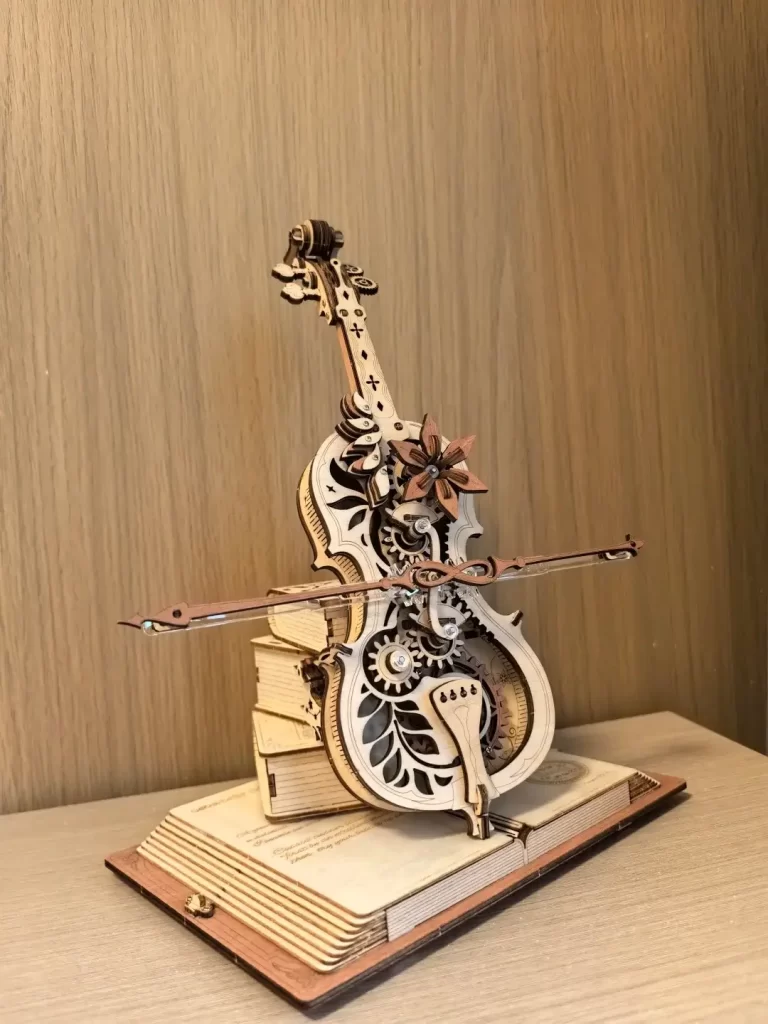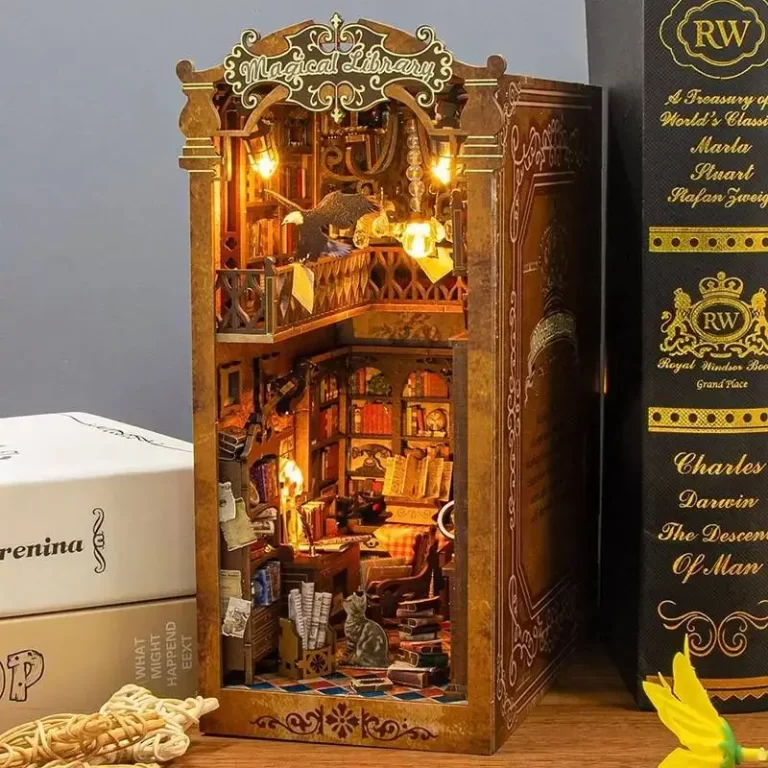
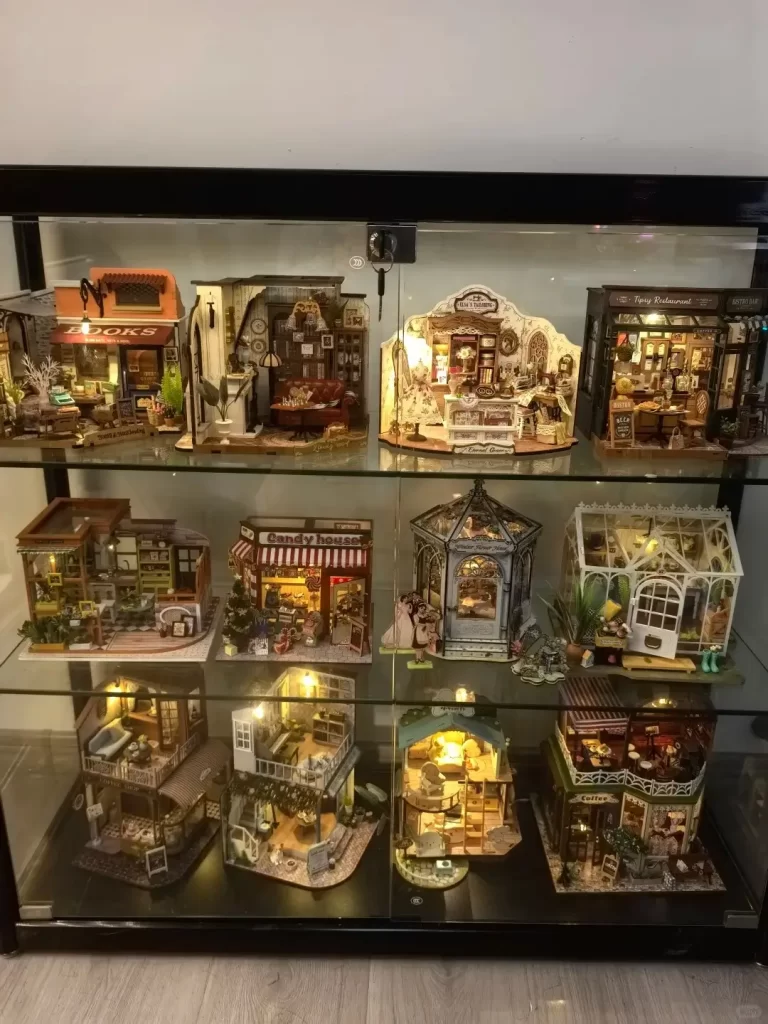
DIY miniature house kits turn small pieces of wood, paper, fabric, plastic, metal, and decorative accessories into detailed miniature interiors. Depending on the design, a finished kit may recreate a café, flower shop, library, living room, studio, restaurant, traditional building, or imaginative fantasy scene.
Their combination of hands-on assembly, detailed decoration, lighting, and display value makes them attractive to hobby stores, gift shops, online sellers, toy and craft retailers, DIY workshops, and private-label brands.
However, wholesale buyers should not judge a miniature house kit only by its finished product image. The building experience depends on many less-visible details, including cutting accuracy, material thickness, printed colors, part organization, instruction clarity, electrical components, packaging protection, and after-sales support.
This guide explains what wholesale buyers should evaluate when selecting DIY miniature house kits, how different configurations suit different retail markets, and which details should be confirmed before sample approval and bulk production.
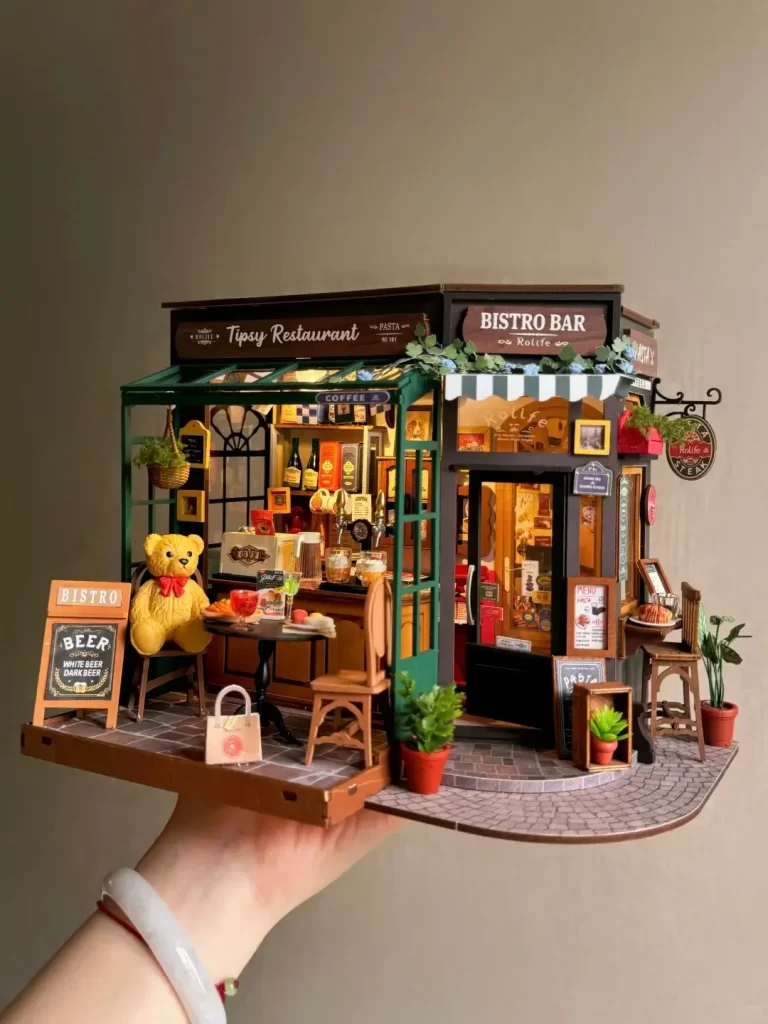
Table of Contents
What Is a DIY Miniature House Kit?
A DIY miniature house kit is a boxed craft project containing materials and components that users assemble into a small three-dimensional interior or building scene.
It may also be described as a:
- DIY miniature dollhouse kit
- Miniature room kit
- Miniature model house kit
- Wooden miniature house kit
- DIY mini house kit
Unlike a traditional children’s dollhouse supplied mostly assembled, these kits usually require the customer to build furniture, fit wooden structures, cut or fold decorative paper, arrange small accessories, and connect lighting components.
The process is therefore part of the product’s value. Customers are not only purchasing a finished decoration; they are purchasing a structured creative project and the satisfaction of building the final scene themselves.
Many detailed miniature house kits are designed primarily for teenagers and adults. Age grading should nevertheless be determined according to the design, included tools, small parts, electrical components, instructions, and safety requirements of the target market.
Why DIY Miniature House Kits Appeal to Retail Customers
Miniature house kits occupy several product categories at the same time.
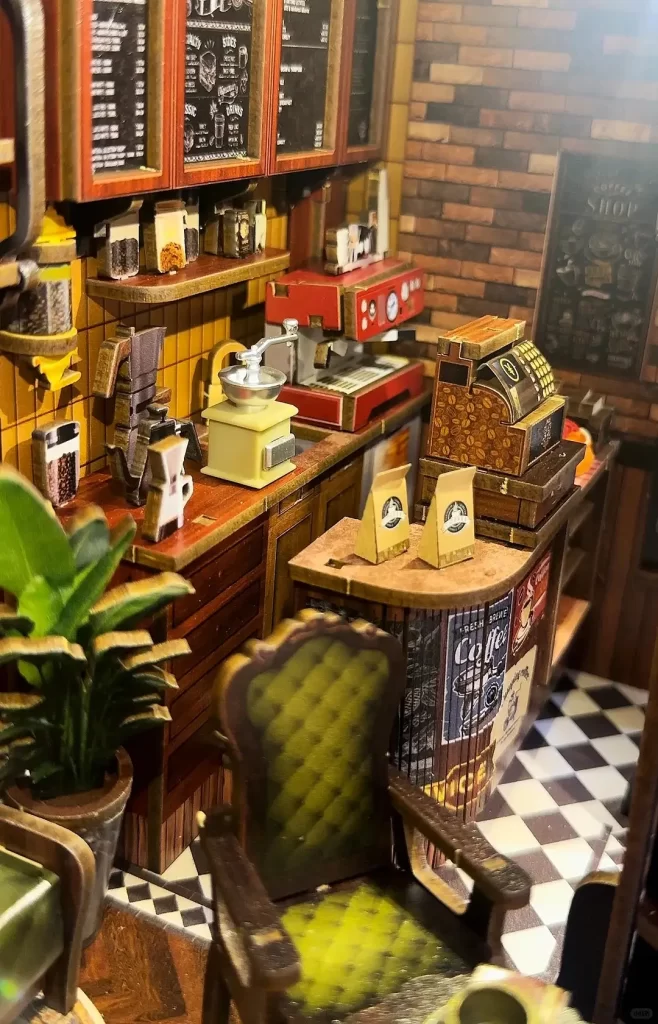
They can function as:
- Creative hobby kits
- Decorative model kits
- Handmade gifts
- Collectible miniatures
- Desk and shelf decorations
- Family or group activities
- Workshop projects
- Educational construction activities
- Seasonal and themed gifts
This range of uses gives retailers several ways to position the same category.
A hobby store may emphasize the detailed assembly process. A gift shop may focus on the finished appearance and packaging. An online seller may build collections around visual themes. A DIY studio may select smaller projects that can be completed within a planned activity period.
For private-label brands, miniature houses also offer a high degree of product differentiation. Themes, structures, colors, accessories, instructions, packaging, lighting, and difficulty levels can all be adjusted to create a more distinctive range.
What Is Usually Included in a Miniature House Kit?
The contents vary considerably by design, so buyers should confirm a complete component list for every model.
A typical kit may include:
- Laser-cut MDF, plywood, or engineered-wood pieces
- Printed paper and decorative cards
- Fabric materials
- Plastic, metal, or resin accessories
- Miniature furniture components
- Decorative plants and flowers
- Stickers
- Transparent panels or windows
- LED light wire
- Battery box
- Electrical connectors
- Tweezers
- Sanding stick
- Ruler or other small tools
- Illustrated instruction manual
- Protective packaging
- Optional dust cover
- Optional music module or moving component
Glue and batteries require special attention. Depending on the destination, shipping method, carrier rules, and product configuration, they may not be included in the export package. Buyers should therefore confirm this before preparing product listings or selling the kits to consumers.
The component list should be accurate and specific. A description such as “wooden pieces and accessories” is usually not enough for a wholesale order involving hundreds or thousands of kits.
Main Types of DIY Miniature House Kits
Gami Crafts has access to a much broader range than the selected examples displayed online. Through multiple manufacturing partners, we can support hundreds of available designs as well as new product development.
The category can be divided in several useful ways.
Open-Scene Miniature Rooms
These products usually have an open front and one or more visible sides.
They allow customers to see the complete interior after assembly and are suitable for shelves, desks, cabinets, and retail displays.
Common themes include living rooms, shops, cafés, studios, bedrooms, kitchens, gardens, and workshops.
Enclosed Miniature Houses
An enclosed kit has a more complete external structure, such as walls, a roof, doors, and windows.
These designs often create a stronger building appearance, but they may require more structural assembly and careful alignment.
Compact Miniature Kits
Smaller designs generally use fewer parts and require less shelf space.
They may suit gift shops, impulse-purchase displays, beginners, workshops, and online sellers seeking products with lower parcel volume.
A small finished size does not always mean that a kit is easy. Difficulty also depends on the number and size of its components.
Large and Detailed Kits
Larger products can include multiple rooms, staircases, advanced furniture, extensive lighting, and more decorative details.
They may appeal to experienced hobbyists and collectors but normally require clearer instructions, better part organization, and stronger protective packaging.
Framed and Display-Ready Kits
Some products use a surrounding frame, transparent cover, or dust cover to protect the finished scene.
These options can improve display value and may be particularly suitable for gifts, home décor, collectors, and premium retail positioning.
Lighted Miniature Houses
LED lighting is a common feature because it can make the finished scene more attractive.
The configuration may include:
- LED light wire
- Individual light points
- Battery box
- Switch
- Connectors
- Concealed wiring paths
Lighting also introduces additional quality-control requirements. The wire length, connection method, battery-box function, component placement, and instructions should all be checked before bulk production.
How to Evaluate the Quality of a DIY Miniature House Kit
From a sourcing perspective, a beautiful sample photograph does not provide enough information to judge the product.
The following points have a direct effect on assembly, customer reviews, return rates, and repeat orders.
1. Cutting Accuracy and Slot Fit
Wooden structures often use slots, tabs, and interlocking parts.
If the cuts are inaccurate:
- Parts may not fit together
- Walls may lean
- Furniture may become uneven
- Small pieces may break during assembly
- Customers may need to modify parts manually
Good laser cutting should produce clean edges, consistent shapes, and reliable alignment. Buyers should assemble at least one complete sample rather than checking only loose wooden sheets.
Minor sanding can be a normal part of model building, but customers should not be required to repair major cutting errors.
2. Edge Quality
Dark burn marks, splinters, rough surfaces, and incomplete cuts can reduce the perceived quality of a kit.
The acceptable appearance depends partly on the product style. A rustic wooden model may tolerate more visible wood texture, while a premium decorative interior generally requires cleaner finishing.
Sample inspection should check both large structural panels and small detailed components.
3. Material Stability
Miniature house kits may combine engineered wood, solid wood, paper, fabric, plastics, metals, paints, and adhesives.
Important questions include:
- Is the wooden material flat?
- Is its thickness consistent?
- Does it bend or split easily?
- Are printed papers thick enough for assembly?
- Do fabrics fray excessively?
- Are transparent panels scratched?
- Are small plastic and metal pieces formed correctly?
Material selection should match the product’s structure and target price rather than being based only on the lowest possible cost.
4. Printing and Color Accuracy
Printed floors, walls, signs, packaging, stickers, and decorative pieces contribute significantly to the final appearance.
UV printing and other printing methods should be evaluated for:
- Color consistency
- Registration accuracy
- Sharp details
- Surface adhesion
- Resistance to ordinary handling
- Consistency between the approved sample and bulk production
For customized products, brand colors and printed elements should be confirmed with an approved physical or digital reference.
5. Component Completeness
A miniature kit may contain dozens or hundreds of individual pieces.
One missing structural panel or distinctive accessory can prevent the customer from completing the project.
Quality control should therefore include:
- Part-list verification
- Quantity checks
- Bag and compartment labeling
- Accessory matching
- Electrical-component checks
- Manual-to-component comparison
The packing structure should also make it easy for the end user to identify each group of components.
6. Instruction Manual Quality
Instructions are one of the most important parts of a miniature house kit.
A manual should clearly show:
- Component identification
- Assembly order
- Cutting and folding steps
- Furniture construction
- Placement of accessories
- Wiring paths
- LED connection
- Final scene arrangement
- Safety notices where applicable
Photographs, diagrams, numbering, and text must correspond to the actual production version.
Gami Crafts can support Chinese, English, and customized-language instructions depending on the project. Buyers should arrange professional language review rather than relying only on direct machine translation for complex assembly steps.
7. LED and Battery-Box Function
For lighted products, samples should be tested after full assembly.
The inspection should cover:
- LED operation
- Wire connections
- Battery-box function
- Switch performance
- Wire length
- Lighting position
- Heat and electrical considerations
- Clarity of the wiring instructions
Applicable testing requirements depend on the product design and destination market.
8. Packaging Protection
A color box may look attractive but still fail to protect delicate components.
Packaging should protect against:
- Broken wooden sheets
- Bent panels
- Crushed boxes
- Scratched transparent pieces
- Missing accessory bags
- Loose parts moving during transit
- Damage caused by tools or battery boxes pressing against other components
Retail packaging, inner trays, bags, dividers, cartons, and palletization should be considered as one complete system.
For e-commerce products, parcel delivery conditions may be more demanding than traditional carton delivery to a retail warehouse.
Choosing Kits for Different Retail Customers
Wholesale buyers should build a range around customer ability and sales context, rather than selecting products only by visual preference.
Beginners
Beginner-oriented kits should generally have:
- Clear instructions
- Fewer highly delicate parts
- Straightforward lighting
- Good part labeling
- Moderate assembly time
- A recognizable finished result
The words “easy” or “beginner” should only be used after the kit has actually been assembled and evaluated.
Experienced Hobbyists
More experienced customers may prefer:
- Larger structures
- More furniture pieces
- Detailed paper and fabric work
- Multiple lighting points
- Complex room layouts
- Longer assembly projects
- Collector-oriented themes
These customers may accept greater complexity, but they still expect accurate cutting and complete components.
Gift Shops
Gift-focused products benefit from:
- Attractive packaging
- Clear finished-product photography
- Moderate parcel size
- Popular and recognizable themes
- Display-ready results
- Giftable price positioning
A framed product or dust cover can also improve its perceived value.
Online Sellers
Online product pages should clearly state:
- Finished dimensions
- Package dimensions
- Main materials
- Approximate part count, where available
- Recommended age
- Difficulty level
- Whether lights are included
- Whether batteries and glue are included
- Tools and accessories
- Assembly requirement
- Packaging format
Unclear descriptions often lead to incorrect customer expectations.
DIY Workshops
Workshop buyers need products that match the available session time and participant skill level.
They should also consider:
- How materials are distributed
- Whether glue or tools must be shared
- How easily steps can be demonstrated
- Whether partially completed work can be transported
- Availability of replacement parts
Private-Label Brands
Private-label buyers may need a coordinated series rather than one isolated design.
The series can be developed around:
- A shared visual style
- Related themes
- Different difficulty levels
- Consistent packaging
- Coordinated accessory colors
- A unified instruction system
- Entry, standard, and premium price levels
OEM, ODM and Private-Label Options
Gami Crafts Co., Ltd. has its own production facilities.
This gives us greater flexibility when matching a project with the appropriate design capability, production equipment, material system, order quantity, price level, and delivery requirement.
Available options may include:
- Existing-design selection
- Custom logo
- Private-label packaging
- Custom instruction manual
- Custom product name
- Custom colors
- Custom dimensions
- Structural modifications
- Accessory changes
- LED configuration changes
- Dust-cover options
- Gift packaging
- Exclusive design development
- Customer artwork or reference-sample development
- OEM production
- ODM product development
Customization does not always require developing every component from zero.
For example, a buyer may begin with an existing structure and customize the theme, printed surfaces, colors, accessories, instructions, and packaging. This can reduce development time while still creating a differentiated product.
For a more exclusive project, structural design and tooling may also be developed according to the buyer’s concept and commercial requirements.
A Practical Custom Development Process
A typical custom project may follow these stages:
1. Requirement Review
The buyer provides information such as:
- Product concept
- Target market
- Customer age group
- Target price
- Expected order quantity
- Preferred dimensions
- Visual references
- Packaging requirements
- Compliance requirements
2. Design and Production Evaluation
The structure, materials, accessories, lighting, assembly method, packaging, and production feasibility are reviewed.
Potential problems should be identified before detailed development begins.
3. Artwork and Sample Development
Files may include AI, PDF, PSD, CorelDRAW, CAD, 3D files, images, or physical reference samples, depending on the project.
A prototype or production sample is then prepared for evaluation.
4. Sample Assembly and Approval
The buyer should not approve the sample only from photographs.
Whenever practical, one sample should be completely assembled to verify:
- Fit
- Instructions
- Missing parts
- Appearance
- Lighting
- Assembly difficulty
- Packaging
- Finished stability
5. Specification Confirmation
The approved design should be recorded in a clear specification covering materials, colors, accessories, dimensions, packaging, instructions, labeling, carton quantity, and inspection requirements.
6. Bulk Production and Quality Control
Production may include laser cutting, printing, accessory preparation, manual assembly work, component sorting, packing, and final inspection.
Key quality points should match the approved sample.
7. Packing and Shipping
The final stage includes carton checks, labels, shipping marks, quantity confirmation, and logistics coordination.
Replacement Parts and After-Sales Support
Because miniature house kits contain many small components, a practical replacement-parts process is important.
A buyer should record:
- Product code
- Production batch
- Part number
- Quantity required
- Photograph of the missing or damaged component
- Customer or order reference
Gami Crafts can coordinate replacement materials for confirmed missing or damaged components according to the product and order record.
This does not remove the need for packing inspection, but it provides a practical solution when an isolated problem occurs after delivery.
Product Testing and Compliance
The manufacturer network supporting Gami Crafts includes factories with various management audits, material documents, and product test reports. Available documentation may involve systems or standards such as:
- ISO 9001
- FSC
- BSCI
- SEDEX or SMETA
- EN71
- ASTM F963
- CE
- RoHS
- CARB
However, a factory certificate does not automatically mean that every product configuration is covered.
Before ordering, buyers should confirm:
- Which factory will produce the product
- Which documents apply to that factory
- Whether the report covers the selected materials
- Whether the tested product matches the ordered configuration
- Whether testing is still valid
- Whether additional testing is needed for the destination market
The correct documentation depends on product classification, recommended age, materials, electrical components, packaging, and local requirements.
What Buyers Should Confirm Before Bulk Ordering
Before approving a wholesale miniature house order, confirm the following:
- Product code and version
- Finished dimensions
- Packaging dimensions
- Main materials
- Full component list
- Difficulty level
- Recommended age
- Lighting configuration
- Battery requirements
- Whether batteries are included
- Whether glue is included
- Tool-kit contents
- Language of instructions
- Part labeling method
- Replacement-parts process
- Retail packaging
- Carton quantity
- Custom logo and artwork
- Test and compliance requirements
- Sample approval
- Inspection standard
- Production schedule
- Shipping method
A written specification reduces misunderstandings between the buyer, supplier, and production team.
Why Work with Gami Crafts?
Gami Crafts Co., Ltd. supplies DIY arts, crafts, and hobby kits for wholesale, OEM, ODM, and private-label projects.
We have our own production facilities and partner with multiple specialized manufacturers, rather than limiting buyers to a single factory or product line.
This allows us to support:
- Hundreds of available styles
- Different product structures and price levels
- Small and large projects
- Existing designs and custom development
- Multiple material and accessory options
- Different packaging solutions
- Retail, e-commerce, gift, workshop, and private-label markets
- Quality and compliance requirements for different destinations
Only selected examples are displayed on our website because the available range is extensive and changes as new products are developed.
Buyers can contact us for the latest catalog, recommended products, samples, customization options, and wholesale quotations.
Frequently Asked Questions
What is included in a DIY miniature house kit?
Contents vary by model. A kit may contain pre-cut wooden pieces, printed paper, fabric, plastic and metal accessories, miniature furniture, decorative plants, LED lights, a battery box, tweezers, a sanding stick, stickers, and instructions.
Are DIY miniature house kits suitable for adults?
Many detailed miniature house kits are designed for teenagers and adults because they contain small components and require patience and careful assembly. The appropriate age depends on the specific product and target-market requirements.
Are miniature house kits difficult to assemble?
Difficulty varies according to structure, part count, component size, paper and fabric work, lighting, and instruction quality. A product should be assembled and evaluated before being described as beginner, intermediate, or advanced.
Are glue and batteries included?
This depends on the product, destination, and shipping method. Glue and batteries may be excluded due to transportation or regulatory considerations, so buyers should confirm this before ordering.
Can the packaging and logo be customized?
Yes. Gami Crafts can support logo, box, label, instruction, accessory, color, and other private-label customization according to the product and order requirements.
Can Gami Crafts develop an exclusive miniature house design?
Yes. Development can range from modifying an existing structure to creating a more exclusive product based on the buyer’s concept, reference images, artwork, or sample.
Can instructions be supplied in different languages?
English, Chinese, and customized-language manuals can be arranged. Complex translations should be reviewed by a fluent or professional language reviewer before production.
Can replacement parts be supplied?
Replacement materials can be coordinated for confirmed missing or damaged components according to the product code, batch, part information, and order record.
What should retailers check when comparing suppliers?
Retailers should compare cutting accuracy, material stability, printing quality, part completeness, instruction clarity, LED performance, packaging protection, compliance documents, sample quality, and after-sales support—not only unit price.
Does the website show the complete Gami Crafts miniature-house catalog?
No. The website displays selected examples. Gami Crafts has access to hundreds of existing designs through multiple manufacturing partners and can also support custom development.
Conclusion
Wholesale DIY miniature house kits offer strong possibilities for hobby retail, gifts, e-commerce, workshops, and private-label product lines.
Their commercial value depends not only on an attractive finished design, but also on the complete building experience. Accurate cutting, stable materials, clear printing, organized components, reliable lighting, understandable instructions, protective packaging, and practical after-sales support all contribute to customer satisfaction.
Gami Crafts Co., Ltd. supports ready designs, custom development, OEM/ODM production, private labeling, packaging customization, and wholesale supply through a network of specialized manufacturing partners.