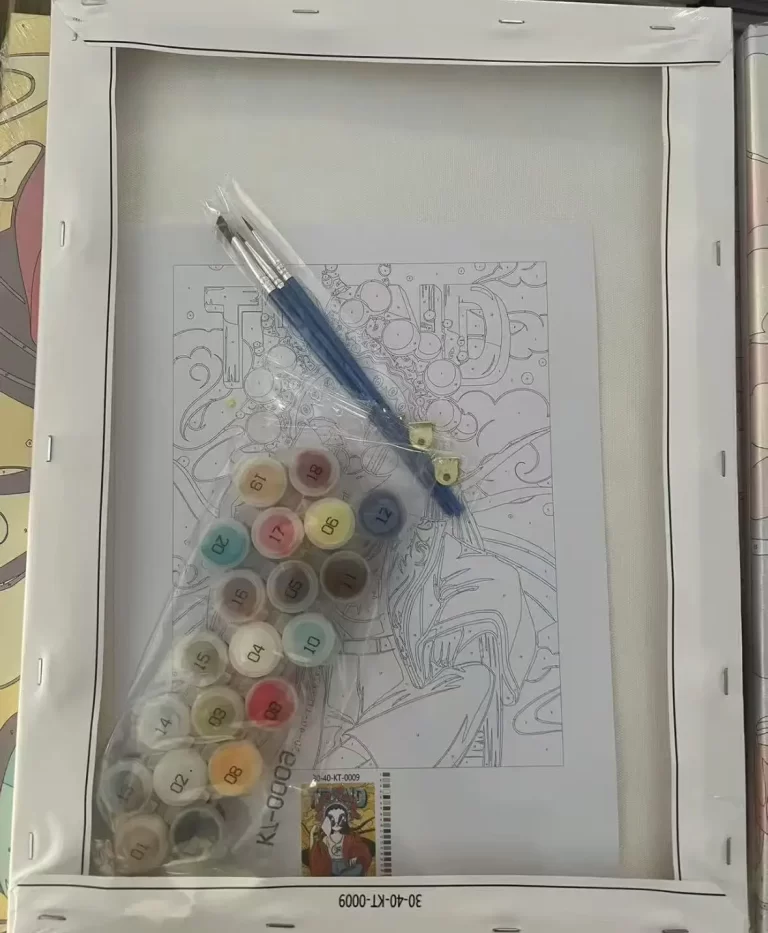
Diamond painting is a structured DIY craft that combines elements of cross-stitch, mosaic art, and paint by numbers. Instead of using thread or paint, users place small, faceted drills onto a pre-printed adhesive canvas to create a colorful and reflective finished image.
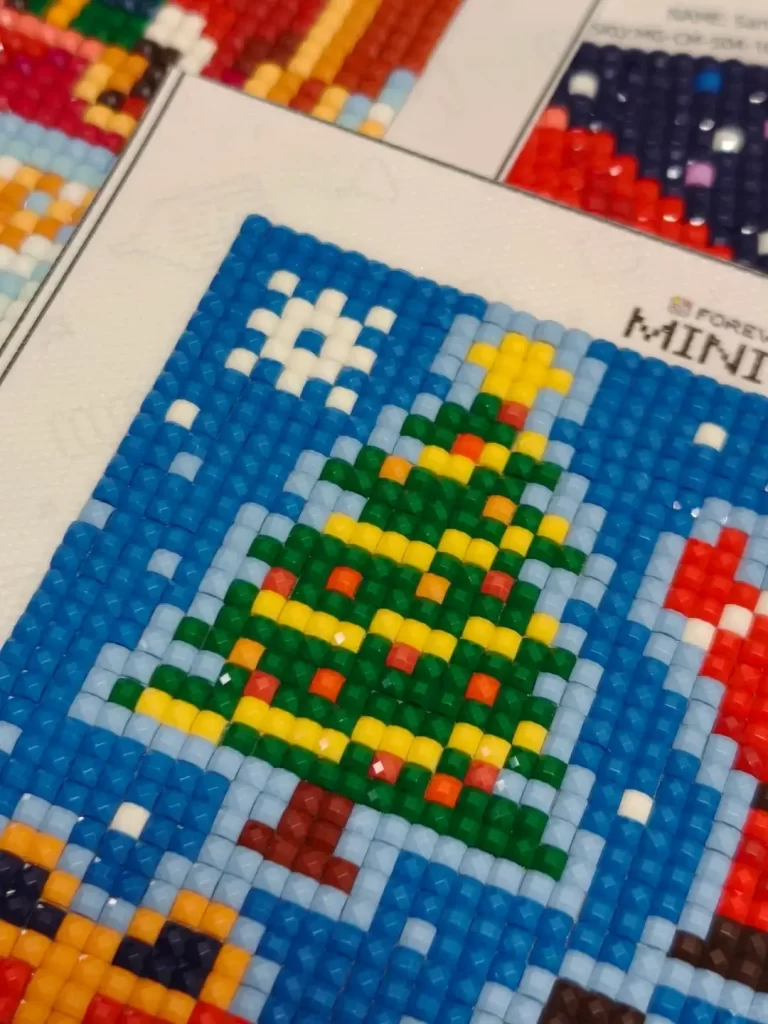
Its clear symbol system and ready-to-use kit format make diamond painting accessible to beginners, while the wide range of designs, sizes, drill shapes, frames, and customization options also makes it suitable for experienced hobbyists, gift buyers, retailers, brands, and creative workshops.
However, not every diamond painting kit offers the same experience. Canvas printing, adhesive quality, drill consistency, image conversion, packaging, and accessories can all affect the final result.
This guide explains how diamond painting works, the main types of kits available, their benefits and limitations, and the most important quality points to check before purchasing or sourcing diamond painting kits.
Table of Contents
What Is Diamond Painting?
Diamond painting, sometimes called diamond art, is a craft activity in which small resin or acrylic drills are placed onto a coded adhesive canvas.
Each area of the canvas contains a letter, number, or symbol. These symbols correspond to specific drill colors shown on a printed color chart. Users select the correct drill color and place each piece onto the matching symbol with a diamond applicator pen.
The word “diamond” refers to the faceted surface and reflective appearance of the drills. They are decorative craft components rather than real diamonds.
As more drills are placed, the image gradually becomes visible. Once completed, the surface reflects light and creates a textured, mosaic-style effect that is different from ordinary printed wall art.
How Does Diamond Painting Work?
Most diamond painting kits follow a simple process.
1. Check the Canvas and Color Chart
The canvas contains printed symbols, while the chart shows which drill color matches each symbol.
Before starting, users should check that the symbols are clear and that the drill bags correspond correctly with the chart.
2. Pour the Drills into the Tray
A small quantity of drills is poured into the sorting tray. Gently shaking the tray helps the drills settle into rows with the faceted side facing upward.
3. Prepare the Applicator Pen
The tip of the applicator pen is pressed into the supplied wax or adhesive pad. This allows the pen to pick up individual drills.
4. Place the Drills on the Canvas
The protective film is lifted from a small section of the canvas. Drills are then placed onto the corresponding symbols one by one.
Working in small sections helps protect the adhesive surface from dust and prevents the canvas from becoming difficult to handle.
5. Check and Press the Completed Section
After completing an area, users can check for misplaced, missing, or uneven drills. Gentle pressure from a clean roller, book, or flat surface can help secure the drills.
What Is Included in a Diamond Painting Kit?
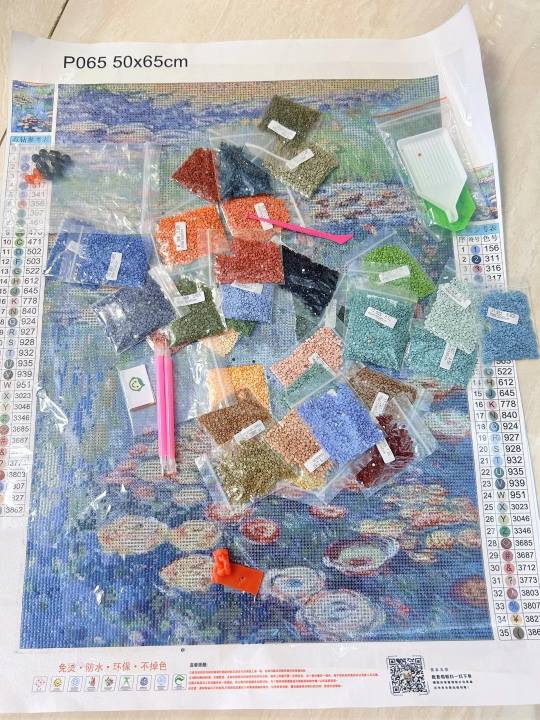
A standard diamond painting kit normally includes the basic materials required to complete the project.
Common components include:
- Pre-printed adhesive canvas
- Individually packed drills
- Diamond applicator pen
- Wax or adhesive pad
- Sorting tray
- Color and symbol chart
- Instructions
- Tweezers, depending on the product
- Resealable bags, depending on the tool set
- Optional frame
- Optional retail box or customized packaging
The exact contents vary according to the product level, drill type, canvas size, frame option, target market, and buyer requirements.
For wholesale and private-label orders, tool kits can also be upgraded. Buyers may select different trays, applicator pens, tweezers, multi-placer tools, packaging boxes, instructions, and accessories.
Main Types of Diamond Painting Kits
Understanding the main product types helps consumers choose a suitable project and helps retailers build a more balanced product range.
Full Drill vs Partial Drill Diamond Painting
Full Drill Diamond Painting
A full drill design requires drills to be placed across the entire printed image area.
This creates a more consistent textured surface and usually produces a stronger overall reflective effect. Full drill products are often preferred by experienced hobbyists and customers who want a more complete decorative result.
However, full drill designs normally require more time and patience.
Partial Drill Diamond Painting
A partial drill design only requires drills on selected areas of the canvas.
Printed areas remain visible around the drilled sections, allowing reflective details to stand out against the background. Partial drill products are generally faster to complete and may be suitable for beginners, children of an appropriate age, workshops, and shorter craft activities.
Neither option is automatically better. The correct choice depends on the intended customer, design, price level, and completion time.
Round vs Square Diamond Painting Drills
Round Drills
Round drills are usually easier to place because their shape allows slightly more space between pieces.
They can be a practical choice for beginners, casual hobbyists, small-format designs, and activity kits where ease of use is important.
Square Drills
Square drills can fit more closely together and create a more continuous mosaic-style surface.
They require more precise placement, especially in detailed areas. For this reason, they may appeal more to experienced users or customers who prefer a tightly covered finished image.
Gami Crafts can support both round and square drill products through different manufacturing partners.
AB, Crystal and Special-Shaped Drills
In addition to standard drills, diamond painting kits may use decorative drill effects.
These can include:
- AB drills with an iridescent surface coating
- Crystal-style drills
- Bright or reflective drills
- Special-shaped drills
- Mixed drill sizes
- Decorative large drills
These materials are often used to highlight selected areas such as flowers, jewelry, stars, animals, or decorative borders.
Special drills can make a product more visually distinctive, but they also require careful matching between the design, drill size, adhesive area, and packaging.
Framed and Unframed Diamond Painting Kits
Unframed kits are usually supplied with a rolled canvas and separate accessories. They are lighter and more compact for storage and shipping.
Framed products can be supplied with different support structures, including MDF-based frames or pinewood frames, depending on the product specification and target price.
Framed diamond painting kits are suitable for gift shops, home décor retailers, finished display products, and customers who want a project that is easier to hang after completion.
Wholesale buyers should confirm whether the listed dimensions refer to the complete canvas, the adhesive image area, or the outer frame size.
Custom Photo Diamond Painting Kits
A personal photograph can also be converted into a diamond painting design.
Common applications include:
- Pet portraits
- Family photographs
- Wedding photographs
- Couple portraits
- Children’s photographs
- Memorial images
- Travel photographs
- Local landmarks
- Corporate or promotional images
The quality of the source image is important. Clear images with good lighting, visible facial features, and a simple background generally convert better than dark, blurred, or highly detailed photographs.
Canvas size also affects the result. A small canvas may work for a close-up face, while a group photograph or full-body image normally requires a larger format to preserve recognizable detail.
For custom projects, buyers should review a digital rendering or sample before bulk production.
Benefits of Diamond Painting
Easy for Beginners
Diamond painting follows a clear symbol system, so users do not need previous experience in drawing, painting, or embroidery.
The structured process helps beginners understand what to do at each stage.
Ready-to-Use Kit Format
Most kits contain the basic canvas, drills, pen, wax, and tray required to begin.
This makes the product convenient for retail stores, gifts, workshops, and online sales.
Attractive Finished Appearance
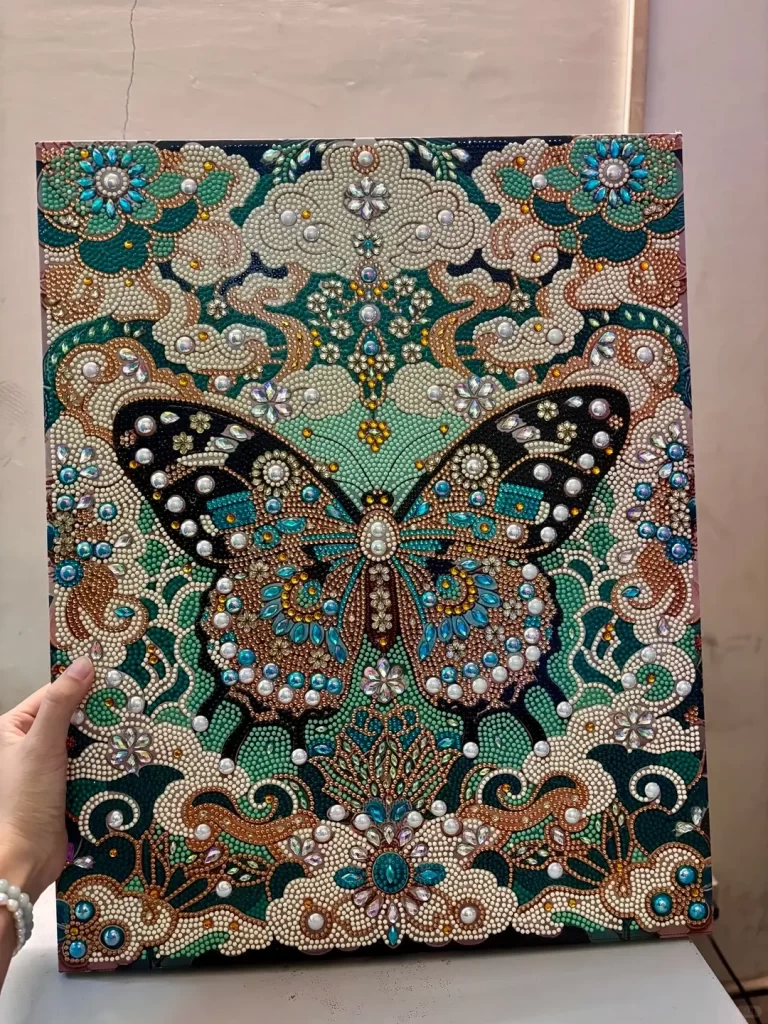
The faceted drills reflect light and produce a bright, textured surface.
Completed projects can be displayed in bedrooms, living rooms, offices, craft rooms, cafés, gift shops, and other interior spaces.
Wide Range of Designs
Diamond painting designs can include:
- Animals
- Flowers
- Landscapes
- Fantasy themes
- Seasonal designs
- Children’s illustrations
- Decorative patterns
- Portraits
- Custom photographs
- Tourist and local themes
This variety allows retailers to develop themed collections for different customer groups.
Clear Sense of Progress
Users can see the image develop section by section.
Many hobbyists find the repetitive placement process focused and enjoyable, while completing the design can provide a clear sense of progress and achievement.
This should be understood as a hobby experience rather than a medical or therapeutic treatment.
Suitable for Gifts and Custom Projects
Diamond painting can be sold as a creative gift, a home décor project, a personalized photo product, or an activity kit.
Custom packaging, logos, designs, tools, instructions, and frames also make it suitable for private-label and promotional projects.
Possible Drawbacks and Limitations
A reliable buying guide should also explain the limitations of the product.
Large Designs Can Take Time
Completion time varies according to canvas size, drill coverage, design complexity, drill shape, and user experience.
Beginners may prefer a smaller or partial drill design before starting a large full drill project.
Small Symbols Can Cause Visual Fatigue
Detailed designs contain small symbols and similar colors.
Good lighting, regular breaks, and a comfortable working position can make the process easier.
The Process Is Repetitive
Diamond painting is a structured activity rather than free-form painting.
Some users enjoy the repeated placement process, while others may prefer crafts that allow more independent drawing or design decisions.
Product Quality Varies
Low-quality kits may have:
- Blurred symbols
- Confusing color codes
- Weak or uneven adhesive
- Inconsistent drill sizes
- Damaged drills
- Missing colors
- Poor image conversion
- Folded or damaged canvas
- Incomplete accessories
This is why buyers should evaluate the entire kit rather than choosing only by the finished image or lowest price.
Small Parts Require Careful Handling
Diamond painting kits contain small components.
They are not suitable for very young children, and children should use them only with appropriate age labeling, adult supervision, and consideration of the safety requirements in the target market.
How to Choose a Good Diamond Painting Kit
From our experience reviewing products and coordinating with manufacturing partners, an attractive design image alone does not guarantee a good kit.
The following details have a direct effect on the user experience.
1. Clear Canvas Printing
Symbols should be sharp, readable, and easy to distinguish.
Similar symbols should not be placed next to each other in a way that creates unnecessary confusion. The printed color chart should also match the drill bag labels.
High-resolution printing is especially important for portraits, animals, text, facial features, and designs with many similar colors.
2. Stable Adhesive Quality
The adhesive should cover the required drill area evenly.
If the adhesive is too weak, drills may move or fall away. If it extends too far beyond the printed area, dust can collect around the design.
The protective film or release paper should also be easy to lift and replace while the project is being completed.
3. Consistent Drill Shape and Size
Drills should be reasonably consistent in size, color, and shape.
A high number of cracked, misshapen, or uneven drills can create gaps and reduce the quality of the finished surface.
Round, square, AB, crystal, and special-shaped drills each require suitable quality control standards.
4. Accurate Image Conversion
Custom photographs and detailed artwork must be converted carefully.
Poor conversion can cause facial features to become unclear, colors to appear unnatural, or small details to disappear.
The source image, canvas size, color palette, drill density, and crop all affect the final result.
5. Sufficient Spare Drills
Drills can occasionally be lost during production, packing, shipping, or use.
Gami Crafts can supply approximately 30% additional drills as a standard allowance, helping reduce the risk that customers cannot finish the project because of a small shortage.
When a confirmed shortage occurs, replacement drills can also be arranged according to the order record and color code.
6. Complete and Suitable Tools
The standard tool kit should be sufficient for the intended product.
Retailers and brands may also select upgraded tools, larger trays, tweezers, multi-placer pens, resealable bags, or custom-colored accessories.
7. Protective Packaging
Rolled canvases should be protected against crushing, moisture, and severe creasing.
Drill bags should be clearly labeled and organized. Frames, trays, pens, and other accessories should be positioned so they do not damage the canvas during shipping.
Custom retail packaging should consider both product presentation and transportation protection.
Diamond Painting for Retailers and Wholesale Buyers
Diamond painting kits can serve different sales channels, but product selection should match the intended customer.
Hobby and Craft Stores
These retailers may offer a wider choice of drill types, difficulty levels, large full drill designs, upgraded tools, and themed collections.
Gift Shops
Gift-oriented products often benefit from attractive packaging, moderate sizes, custom photographs, framed options, and easy-to-understand instructions.
Online and Cross-Border Sellers
Online buyers rely heavily on product images and descriptions.
Sellers should clearly show:
- Finished design
- Canvas size
- Adhesive image size
- Drill shape
- Full or partial drill coverage
- Kit contents
- Frame option
- Packaging
- Recommended difficulty
DIY Workshops and Activity Organizers
Workshops may prefer smaller or partial drill projects that can be completed within a planned activity period.
Tools should be easy to distribute, and drill bags should be clearly organized.
Tourist and Souvenir Shops
Local buildings, landscapes, cultural elements, animals, and destination photographs can be converted into customized product ranges.
Private-Label Brands
Brands can customize:
- Artwork
- Product size
- Drill shape
- Frame
- Tool kit
- Logo
- Instruction sheet
- Retail packaging
- Carton packing
- Product series
What Wholesale Buyers Should Confirm Before Ordering
Before placing a bulk order, buyers should confirm:
- Full drill or partial drill
- Round, square, AB, or special drills
- Canvas and adhesive image dimensions
- Framed or unframed format
- Frame material
- Standard or upgraded tool kit
- Spare drill allowance
- Retail packaging
- Carton packing
- Custom logo and instructions
- Sample approval process
- Applicable test reports and compliance requirements
- Production and delivery schedule
Manufacturing partners may hold different audit, testing, and compliance documents. Applicable certificates and reports should therefore be confirmed according to the specific product, order, age grading, and destination market.
Diamond Painting Supply and Customization from Gami Crafts
Gami Crafts works with multiple manufacturing partners rather than relying on a single factory.
This allows us to match different product types, order quantities, price levels, packaging requirements, and customization needs with suitable production resources.
Available services can include:
- Ready-design diamond painting kits
- Full and partial drill products
- Round, square, AB, crystal, and special-shaped drills
- Custom photo conversion
- Custom canvas sizes
- Framed and unframed products
- MDF and pinewood frame options
- Standard and upgraded tool kits
- Custom logo
- Custom instructions
- Private-label packaging
- OEM and ODM support
- Sample development
- Bulk production
- Approximately 30% additional drills
- Replacement drill support
Before bulk production, buyers can confirm the design, size, drill type, frame, tools, packaging, and other project details.
Frequently Asked Questions
Is diamond painting difficult for beginners?
Diamond painting is generally easy to understand because users follow printed symbols and place matching drills onto the canvas. Beginners may find small or partial drill designs easier for their first project.
What is the difference between full drill and partial drill?
Full drill diamond painting covers the complete printed image area with drills. Partial drill products use drills only on selected parts of the design.
Are round or square drills better?
Round drills are generally easier to place, while square drills create a more tightly covered surface. The better option depends on the customer’s experience and preferred finished effect.
What normally comes in a diamond painting kit?
A standard kit usually contains a printed adhesive canvas, drills, applicator pen, wax, sorting tray, chart, and instructions. Tweezers, frames, extra tools, and retail packaging may also be included.
Can a photograph be converted into a diamond painting?
Yes. Portraits, pets, weddings, families, travel photographs, and other images can be converted. Clear source images and suitable canvas sizes usually produce better results.
How many extra drills should a kit include?
The appropriate allowance depends on the product and supplier. Gami Crafts can provide approximately 30% additional drills as standard and can arrange replacement drills when a confirmed shortage is reported.
Are diamond painting kits suitable for children?
Because the kits contain small parts, they are not suitable for very young children. Age labeling, adult supervision, and target-market safety requirements should be considered.
What should retailers check before ordering wholesale kits?
Retailers should confirm canvas dimensions, drill shape, coverage type, image clarity, kit contents, spare drill allowance, packaging, frame options, compliance requirements, and sample approval.
Conclusion
Diamond painting is an accessible and visually distinctive DIY craft suitable for beginners, experienced hobbyists, gift buyers, retailers, workshops, and customized product projects.
The final experience depends on much more than the design alone. Clear symbols, stable adhesive, consistent drills, accurate image conversion, sufficient spare materials, complete tools, and protective packaging all contribute to a reliable kit.
Gami Crafts supplies diamond painting kits for wholesale, private-label, and OEM/ODM projects through multiple manufacturing partners.